Why Do My Lights Dim When the AC Kicks On?
A quick dip in the lights for a split second when your air conditioner starts is common. The outdoor unit pulls a big burst of power for a moment to get its motor spinning, and your lights feel it. If the lights dim a lot, stay dim, flicker at other times, or some lights get brighter while others dim, that is a warning sign and you should have it checked.
Here is how to tell normal from a problem, what usually causes it, and when to call.
Why the AC Makes Your Lights Blink
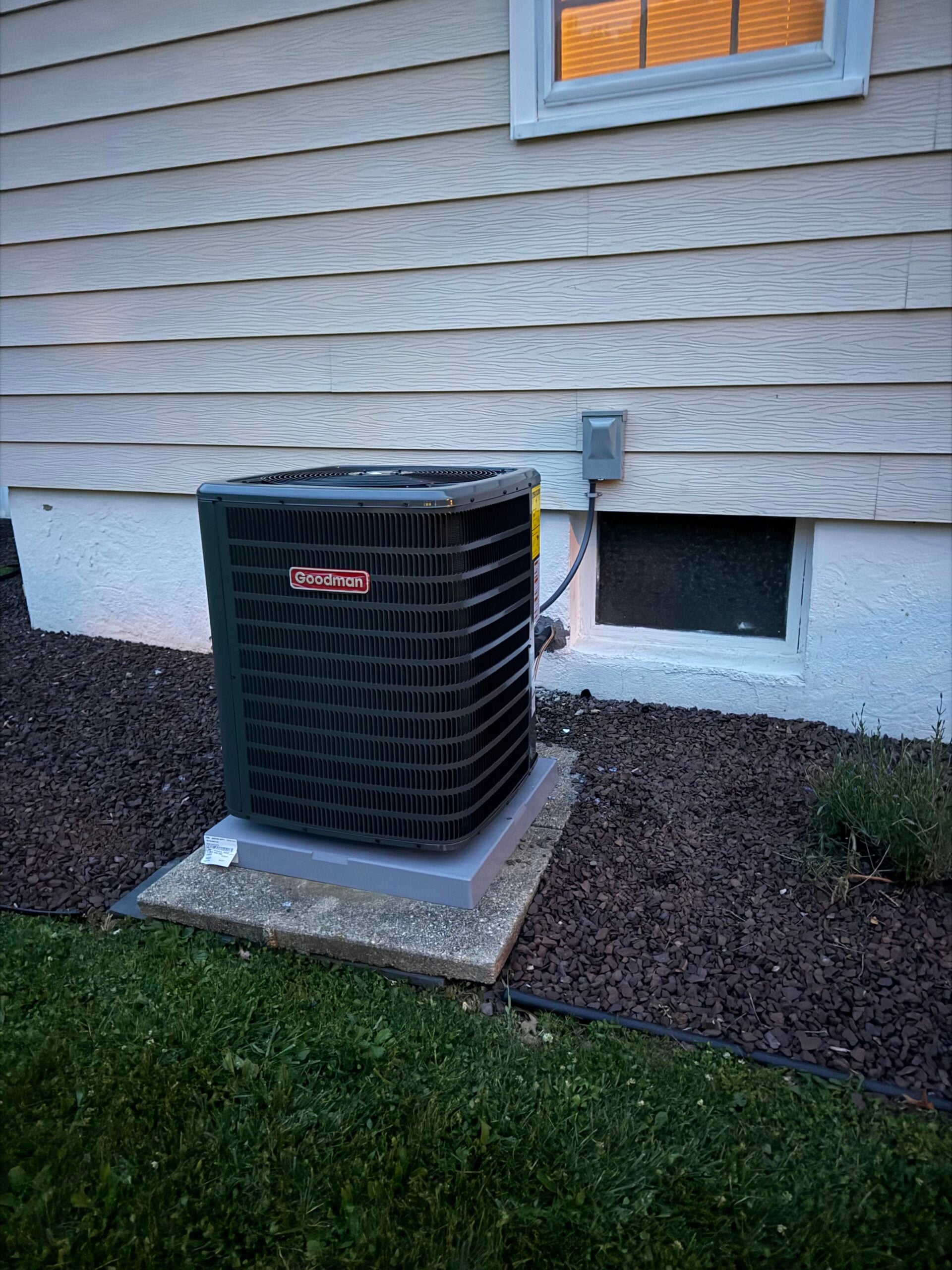
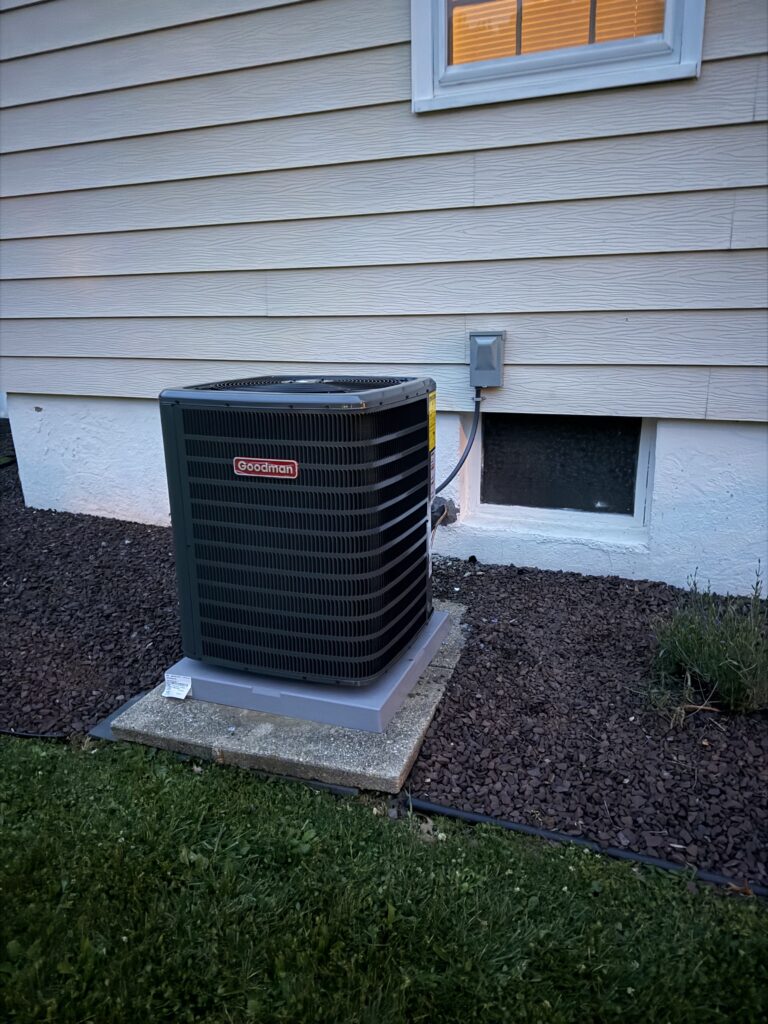
The heart of your central air is the compressor in the outdoor unit. When it starts, it needs several times more power than it uses once it is running. That surge lasts less than a second on a healthy system. Your lights share the same wiring coming into the house, so for that split second they get a little less, and you see a blink.
In a newer home with plenty of power and tight connections, you may never notice it. In an older home, or one where a lot has been added over the years, the blink is easier to see.
Normal Dip or Warning Sign?
Usually normal:
- A brief, small dip when the outdoor unit kicks on, then the lights go right back to normal
- It happens the same way every time and has not gotten worse
Have it checked:
- The dip is deep, or lasts a second or more
- It has been getting worse over the summer
- Lights flicker at random times, not just when the AC starts
- The outdoor unit hums, clicks or struggles before it starts
- The AC breaker trips
Call right away:
- Some lights get brighter while others get dimmer
- You smell burning or see scorch marks at the panel or the outdoor switch
- Lights go very dim or electronics shut off
“Very professional and polite service, came out to address our concerns with a flickering light and appliance power outages. Provided plausible causes and very courteous. Thank you!”
What Usually Causes It
1. A weak start part on the AC
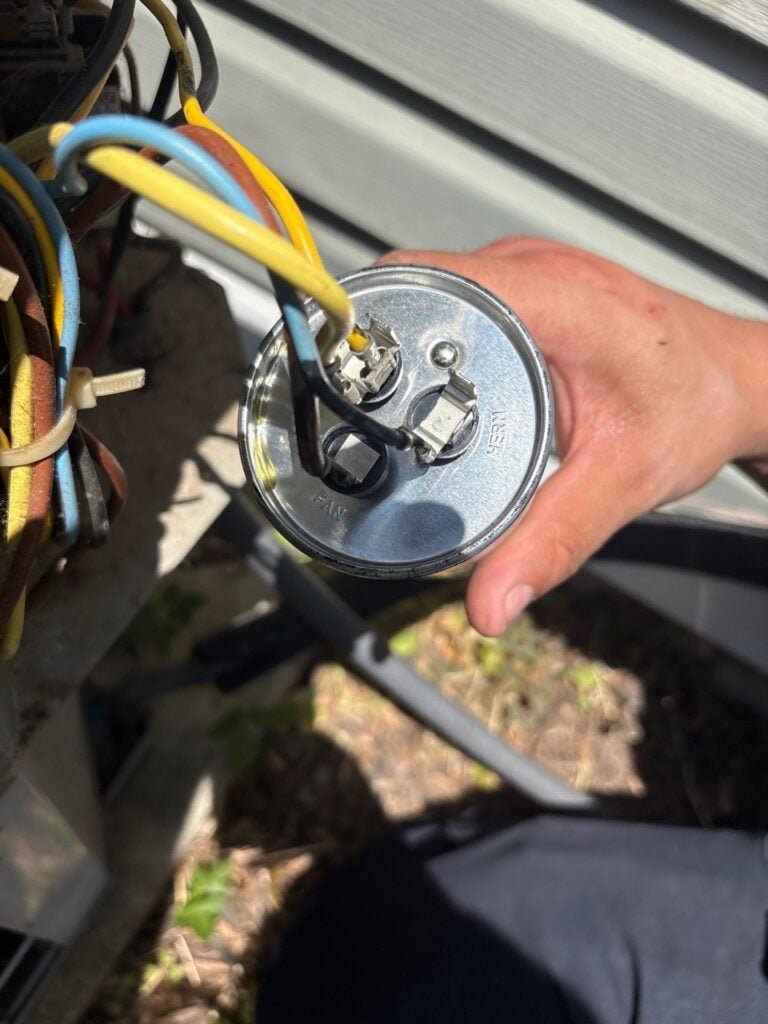
The outdoor unit has a start part, called a capacitor, that gives the motors a kick when they start. Heat wears it out over time. As it weakens, the compressor struggles longer to get going and pulls that big surge for longer, so the dip gets deeper. Other signs: the unit hums before it starts, or the fan spins slowly. It is a common, quick repair. We test it before we replace it, so you do not pay for a good part.
2. A hard start kit could help
On some older systems, the surge is just big. A hard start kit is a small add-on that gives the compressor an extra push so it starts faster, which shortens the dip. It is a good fix for a healthy older system. It is not a fix for loose wiring or a unit that is near the end of its life.
3. Loose wiring
A loose connection anywhere between the street and the outdoor unit makes the dip worse, because power has a harder time getting through. It can be at the outdoor switch next to the unit, in the panel, at the meter, or on the main wires coming into the house. Loose connections also heat up, and that is how wiring gets burned. This is the one we never want homeowners to ignore.
4. Not enough power coming into the house
Plenty of homes in Central New Jersey still run on 100-amp service, or less, that was sized long before central air, induction ranges and EV chargers. When the AC starts on a house that is already near its limit, the dip is bigger. If you have added big loads over the years and the dimming keeps getting worse, the real fix may be a panel upgrade, which runs $2,000 to $7,000 depending on the house.
5. A problem on the power company side
If your neighbors see the same thing, or the dimming started after a storm, the issue may be the line or the transformer that feeds your street. Call your utility, JCP&L or PSE&G depending on your town. They handle everything up to the meter.
What You Can Check Yourself
- Watch the pattern. Does it only happen when the AC starts, or also with the microwave, dryer or well pump?
- Listen to the outdoor unit. A hum, buzz or several tries to start points to the AC itself.
- Ask a neighbor. If their lights dim too, call the utility.
- Look, do not touch. Check the panel cover and the outdoor switch for scorch marks or a burning smell. If you see either, turn off the AC at the thermostat and call.
Please do not open the panel or the outdoor switch box. Both stay live even with the AC off.
Why an Electrician Who Also Does HVAC Helps
Dimming lights sit right between two trades. An HVAC company may replace the start part and leave a loose wire at the panel. An electrician may tighten the panel and miss a failing start part. Our crews handle both, so one visit checks the outdoor unit, the outdoor switch, the panel and the service coming into the house. See our AC repair service for what that visit covers.
A service call with initial diagnosis is $259.99, and after-hours emergency calls are $389.99. If the fix is bigger, you get a flat price before any work starts. For more on flickering, read why your lights keep flickering or what to do if half your house loses power.
Could your panel be the real problem? Tripping breakers, flickering lights, warm outlets and power that cuts out often start at an old, full or recalled electrical panel. A panel upgrade fixes the cause, not just the symptom. Most panel upgrades in New Jersey run $2,000 to $7,000, and we give you a flat price before any work starts.
Frequently Asked Questions
Is it normal for lights to dim when the AC turns on?
A quick, small dip for less than a second when the outdoor unit starts is common, especially in older homes. Lights that dim a lot, stay dim, or flicker at other times are not normal and should be checked.
Can a bad AC start part make my lights dim?
Yes. The start part, called a capacitor, helps the outdoor motor get going. When it gets weak, the motor struggles longer to start and pulls extra power the whole time, so the dip gets deeper and lasts longer. It is a common, affordable repair.
What is a hard start kit?
It is a small add-on wired into the outdoor unit that gives the compressor an extra push when it starts. It shortens the startup surge and can reduce the dimming. It helps a healthy older system but it does not fix a loose wire or a worn-out unit.
Why do some lights get brighter while others dim?
That pattern points to a loose main wire, either in your panel or on the power company’s side. It can damage electronics and appliances. Turn off sensitive electronics and call an electrician or your utility right away.
Do I need a panel upgrade if my lights dim when the AC runs?
Not always. Many homes just need a loose connection tightened or a weak start part replaced. If your home has 100-amp service or less and you have added central air, an EV charger or other big loads, a bigger service may be the real fix.
Talk to a Real Person Today
Lights dimming more than they used to when the AC starts? Let us find out why before it turns into a bigger repair. Spartan Home Pros is a licensed and insured electrician and HVAC service company with offices in Hazlet, Bridgewater and Chatham, and real people answer 24 hours a day. Call or text (908) 287-2187, or send us a text with a photo and we will tell you what we see.