Do You Need a Permit for Electrical Work in New Jersey?
Yes, most electrical work in New Jersey needs a permit. Adding a circuit, upgrading a panel, installing an EV charger, a generator or a hot tub all need a permit and a town inspection. Simple swaps, like replacing an outlet, switch or light fixture with a similar one, do not. The rules come from the state’s Uniform Construction Code, and your town’s construction office enforces them.
Here is what needs a permit, what does not, who is allowed to do the work, and why skipping the permit can come back to bite you when you sell.
Where the Rules Come From
New Jersey uses one building code for the whole state, called the Uniform Construction Code. Every town follows the same rules, but each town runs its own construction office, and that office issues the permits and sends the inspectors. The state Department of Community Affairs says a permit is needed for new construction and for work on existing buildings, including electrical work. The main exception is what the code calls ordinary maintenance.
So the real question is not “does my town want a permit?” It is “is this job ordinary maintenance, minor work, or regular permit work?”
Jobs That Do Not Need a Permit
The state lists these as ordinary maintenance, so no permit and no inspection:
- Replacing an outlet, switch or light fixture with a similar one, as long as it has no emergency battery pack
- Repairing equipment that is already installed, like a doorbell or a motor-driven appliance
- Replacing a dishwasher
- In one- and two-family homes: installing a doorbell, a burglar alarm or a security system
One catch: if the outlet you are replacing is in a kitchen, bathroom, garage, outdoors or another wet spot, the new one still has to have the right protection. No permit does not mean anything goes.
Jobs That Need a Permit but Can Start Right Away
The code has a middle group called minor work. You still need a permit, but the work can begin once the town has been told about it, even before the permit is issued. In one- and two-family homes this includes:
- Adding five or fewer outlets, when the existing circuits can carry the extra load
- Replacing old wiring with new wiring of the same size
- Wiring that goes along with a new air conditioner, dryer, range or oven
Jobs That Need a Full Permit and Inspection
Anything that adds new wiring or changes the service coming into the house needs a regular permit. The common ones we see:
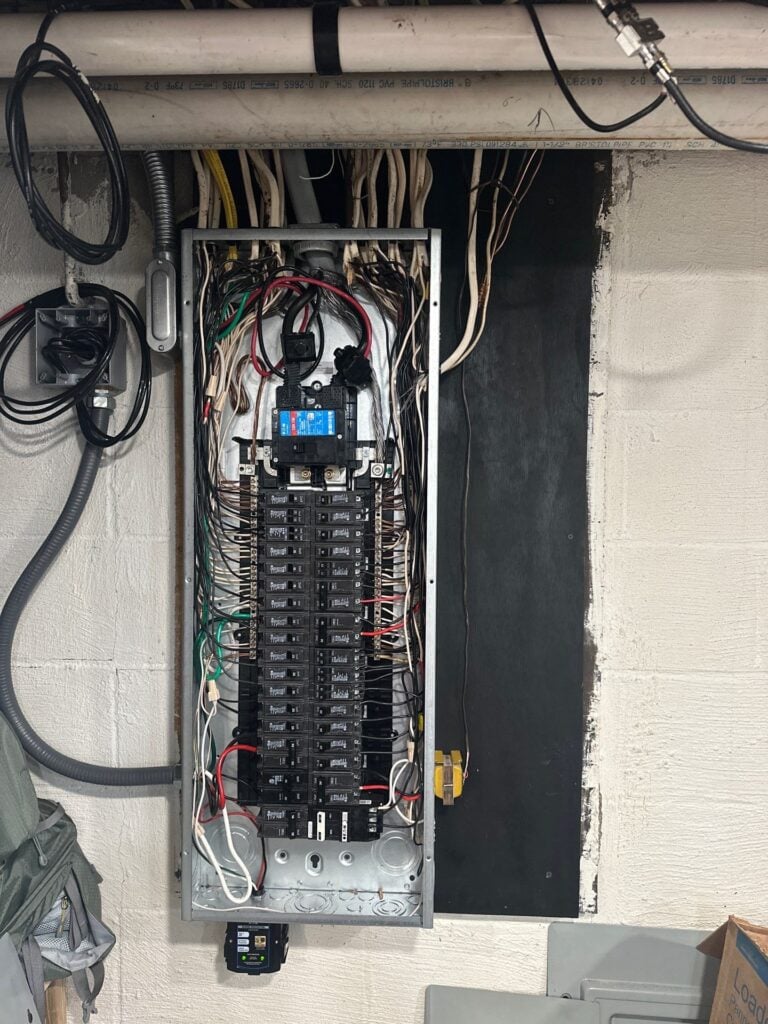
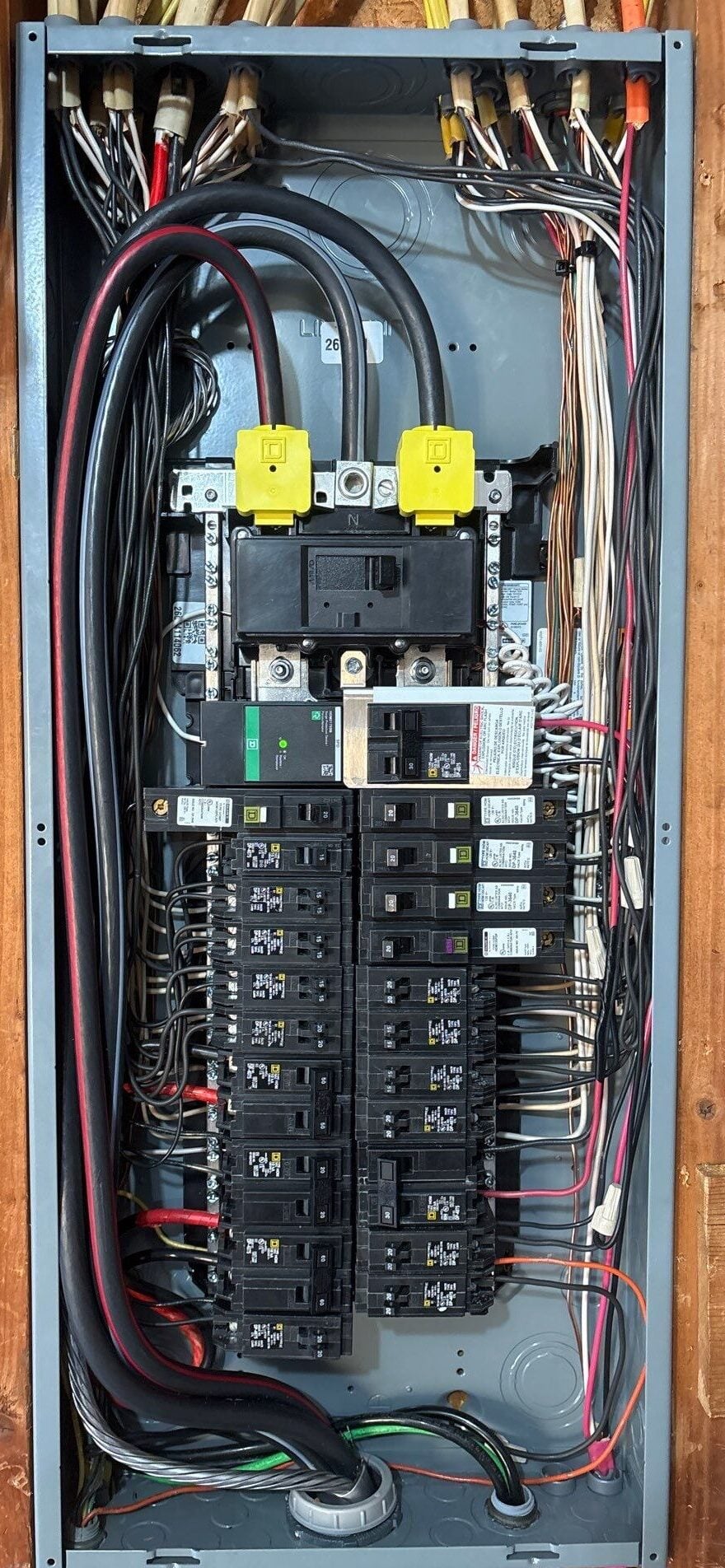
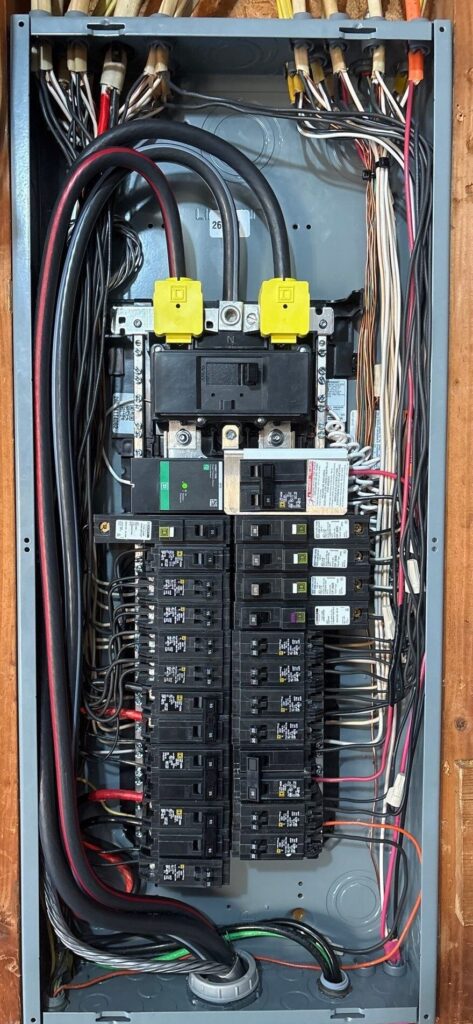
- Panel upgrades and service changes. New panel, bigger service, new meter. The town inspects the work, and the power company usually waits for that approval before turning your power back on.
- New circuits. A dedicated line for a range, dryer, workshop, finished basement or home office.
- EV chargers. A Level 2 charger needs its own circuit, so it needs a permit.
- Generators. A standby generator or a generator hookup ties into your panel.
- Hot tubs and pools. New wiring outdoors near water gets a careful look from the inspector.
- Solar panels and post lights along a driveway.
Some jobs also need a zoning approval from the town, for example a generator pad close to a property line. Your town’s construction office can tell you if zoning applies.
“…I had water intrusion in my main panel, and they responded quickly, diagnosed the issue, and coordinated an expedited upgrade to a new 200-amp service. The crew on site was skilled and professional, and the Mariano handled all communication and coordination smoothly, including getting the township inspection expedited so power could be safely restored. …”
Homeowner Permit or Licensed Electrician?
New Jersey lets an owner who lives in a single-family home do their own electrical work. Town construction offices spell out the limits:
- You have to do the work yourself. A friend, relative or handyman cannot do it under your permit.
- You still need the permit and the inspections, just like an electrician would.
- Two-family homes, rentals and businesses need a state-licensed electrician.
When you hire a licensed electrician, the electrician pulls the electrical permit, not you. That is how it works when you call us: we file the permit with your town, do the work, schedule the inspection, meet the inspector and hand you the paperwork when it passes.
What the Inspection Looks Like
For bigger jobs there are usually two visits. The first is a rough inspection, done while walls and ceilings are still open, so the inspector can see the new wiring, the panel and the service. The second is a final inspection once outlets, switches and fixtures are in. Smaller jobs, like an EV charger on a garage wall, may only need a final.
When everything passes, the town issues a Certificate of Approval. Keep it with your house papers. You will want it when you sell.
Why Unpermitted Work Comes Back to Bite You
Skipping the permit can feel like saving time and a fee. Here is what it can cost later:
- Selling the house. Buyers, home inspectors and attorneys often ask about recent work. If a new panel or finished basement has no permit on file, the town may require one after the fact, and the inspector can ask to open walls to see the wiring. That can push a closing date.
- Insurance. If there is ever a fire or a claim tied to that work, missing permits give the insurance company something to question.
- Safety. The inspection is a second set of eyes on wiring that will be behind your walls for decades. Most of what we fix in older homes is work that never had one.
If you already have work in the house that was done without a permit, it is usually easier to deal with it before you list than in the middle of a sale.
What It Costs
We give you one flat price before work starts, and handling the permit and inspection is part of the job. For reference, a panel upgrade runs $2,000 to $7,000 and a Level 2 EV charger installation runs $1,000 to $2,600, depending on your house. Learn more about our new circuit and wiring work, or read what a panel upgrade costs in New Jersey and what an EV charger install costs.
Could your panel be the real problem? Tripping breakers, flickering lights, warm outlets and power that cuts out often start at an old, full or recalled electrical panel. A panel upgrade fixes the cause, not just the symptom. Most panel upgrades in New Jersey run $2,000 to $7,000, and we give you a flat price before any work starts.
Frequently Asked Questions
Do I need a permit to replace a light fixture or outlet in New Jersey?
Usually not. Swapping an outlet, switch or light fixture for a similar one counts as ordinary maintenance under the state construction code, so no permit is needed. The exceptions are fixtures with emergency battery packs and outlets in spots that need special protection, like kitchens, bathrooms and outdoors, which still have to meet code.
Do I need a permit to install an EV charger in NJ?
Yes. A Level 2 charger needs its own new circuit, and new wiring needs an electrical permit and an inspection from your town. Your electrician pulls the permit, does the work and meets the inspector.
Can a homeowner do their own electrical work in New Jersey?
An owner who lives in a single-family home can do their own electrical work, but they must do it personally and they still need a permit and inspections. Friends, relatives or a handyman cannot do it for them. Two-family homes and rentals need a licensed electrician.
Who pulls the permit, me or the electrician?
When a licensed electrician does the work, the electrician pulls the electrical permit. That is part of the job when you hire us. You only pull a homeowner permit if you are doing the work yourself.
What happens if electrical work was done without a permit?
Many towns can require a permit after the fact, and the inspector may ask to open walls to see the wiring. It can also slow down a home sale and give an insurance company a reason to ask questions after a claim. It is usually easier to fix before you list the house.
How long does an electrical permit take in New Jersey?
It depends on the town. Some construction offices turn simple electrical permits around in a few days and others take longer. Small jobs that count as minor work can start once the town has been notified, before the permit is issued.
Talk to a Real Person Today
Not sure if your project needs a permit? Ask us before you start. We will tell you straight, and if it does, we take care of it. Spartan Home Pros is a licensed and insured electrician and HVAC service company with offices in Hazlet, Bridgewater and Chatham, and real people answer 24 hours a day. Call or text (908) 287-2187, or send us a text with a photo and we will tell you what we see.
Sources
- Uniform Construction Code general information — NJ Department of Community Affairs
- Ordinary maintenance and minor work list — NJ Department of Community Affairs
- When do I need a construction permit — Township of Maplewood Construction Division
- Homeowner work in an owner-occupied single-family home — Village of Ridgefield Park Building Department